
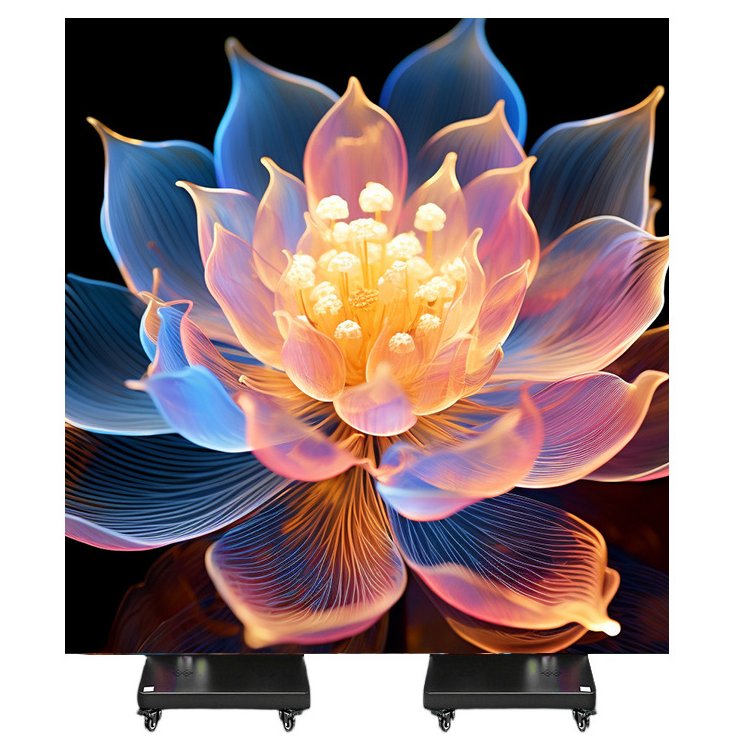
When requesting a multi-display advertising arrangement, ask HMS LED to identify every display unit and state exactly what the system quotation includes. Keep the official gallery arrangement as a visual reference, rather than treating a graphic spanning the presentation as proof of a complete supplied video-wall system. Request separate identification of displays, supports and any proposed control equipment, then ask the supplier to define the intended content arrangement for that specific offer. Quantities and capabilities need supplier confirmation.
State the requested arrangement as an enquiry
Attach the linked foldable-advertising-display product reference and identify the gallery arrangement relevant to the request. Explain that the buyer is enquiring about a multi-display proposal. This connects the discussion to an actual official reference without assuming that every arrangement shown in the gallery is an available package with predetermined contents.
Ask the supplier whether it can propose the requested scope and to identify the relevant version. Keep its answer conditional until the actual offer is returned. A product image can show a display concept or presentation, but it does not replace a component list, confirm commercial availability or define the equipment included in a quotation.
Identify each proposed display unit
Request the supplier’s definition of one display unit for the proposed arrangement. Ask it to connect that definition to a product reference and state the quantity of those units in the offer. Do not count a front-and-rear product view as two supplied displays, or assume that every visible section of a foldable presentation is an independently supplied item.
Keep display-unit quantity separate from the number of supports, bases or external packages. Those references can help identify a proposal but do not automatically use the same counting unit. If the supplier groups components under a system name, ask for the actual included-unit list so a colleague can understand the supply scope without reconstructing the photograph.
Proposed component | Question to confirm | Keep with the system offer
Display units | What does one quoted unit comprise, and how many are offered? | Product references and unit quantities
Bases or supports | Which supports are included for those units? | Identified items and supply status
Joining arrangement | Is any particular arrangement actually proposed? | Supplier-defined scope and applicable reference
Control equipment | What equipment, if any, is included in the proposal? | Named items and separate inclusion statement
Content arrangement | What content scope is proposed for these identified units? | Version-linked supplier description
Keep supports and other hardware separately identified
Ask the supplier to identify the bases, supports and any other physical items included with the proposed displays. Do not infer that a joining component is included because two image surfaces appear adjacent. Equally, do not assume that a photographed support is a separately quoted accessory rather than part of the supplier’s display-unit definition.
Where the proposal depends on another item, request its identification and supply status. Keep offered, separately proposed and outside-scope items distinct in the response. This is an inclusion question for the supplier; it does not prescribe a mechanical connection method, establish structural suitability or approve an installation arrangement from the gallery image.
Ask what the proposed content arrangement actually means
A picture showing one graphic across a presentation does not independently demonstrate a unified content canvas or a particular control configuration. Ask the supplier to describe the content arrangement proposed for the identified display units. Keep that description tied to the actual equipment and version in the quotation.
If the buyer requires separate content on each unit or another specific presentation, state that as a requirement for the supplier to assess. Request applicable content and system information separately. Do not calculate a combined pixel matrix from the image, promise seamless playback, assign a port function or assume compatibility with equipment that is not identified in the accepted offer.
• Define one display unit before accepting the proposed quantity.
• Identify supports and any other offered physical components separately.
• Request a supplier statement for control-equipment inclusion.
• Keep requested content behaviour conditional on the actual system proposal.
Align the commercial line with the component statement
Ask whether each commercial line refers to a display unit, an identified component or a defined system package. Retain that basis beside the inclusion list when comparing proposals. Two offers cannot be treated as equivalent if one covers only display hardware while the other expressly includes additional identified equipment.
Keep optional proposals and unresolved requirements visible. A requested component should not become an assumed inclusion because it appears in a buyer’s enquiry. Likewise, an accepted system name does not verify brightness, power, environmental protection or another performance claim. Request any separately relevant product or application information from the supplier for the actual purchasing context.
Send a multi-unit supply-scope request
An enquiry can read: For a proposed arrangement using the linked advertising-display reference, please define one supplied display unit and list the unit quantity. Identify included bases, supports and any separately proposed hardware or control equipment. State the intended content arrangement for that exact offer and label each commercial line as a unit, component or defined system package.
Retain the supplier’s accepted component statement with the quotation identity. Request a replacement statement if a unit or equipment reference changes. This gives the buyer a clear system-scope decision without assuming a complete video wall from a gallery composition, inventing compatible equipment or supplying connection, installation or powered-operation instructions.
Frequently asked questions
Does a gallery arrangement prove a complete video-wall package is offered?
Request the supplier’s actual unit definition, quantity and component statement for the proposed system.
Does a graphic spanning the presentation prove unified playback?
Ask for the content arrangement and applicable system information tied to the exact offered equipment.
Can supports or joining hardware be assumed to be included?
Keep their supply status explicit in the supplier’s returned component list.
Does a confirmed supply scope verify electrical or installation suitability?
No. Request applicable manufacturer and application information separately; this enquiry defines the commercial components and system scope.
Product and contact references
Product reference: https://hmsled.com/product/p2-53-foldable-advertising-display/
Related LED displays: https://hmsled.com/products/
Contact HMS LED: https://hmsled.com/contact/
HMS LED blog: https://hmsled.com/blog/